
Installing Garage Carpet in NZ Made Simple with These DIY Steps and Expert Advice
- nic6793
- Nov 18
- 7 min read

Imagine this: concrete dust gets tracked through the house every time you park the car, and the garage floor's so hard on your knees you avoid working on projects down there. You've been eyeing how to install garage carpet NZ for months, but quotes seem too steep for what looks like a straightforward job.
Here's the thing: installing garage carpet yourself is genuinely doable if you're reasonably handy and have a free weekend. But - and this matters - it's also easy to mess this up in ways that cost more to fix than hiring professionals in the first place.
This guide shows you exactly how to install garage carpet in NZ conditions (especially if you're in the Dunedin or wider Otago area), what tools you actually need, where DIYers typically go wrong, and when it makes sense to call in the experts instead. If you're on the fence, keep reading, and we'll help you decide.
Is DIY Garage Carpet Installation Right for You?

Before you commit to a weekend project, an honest assessment saves hassle later. See how you fare against the list below.
Good Candidates for DIY:
Single garage with a simple rectangular layout
Reasonably level concrete floor
You're comfortable using basic tools
You've got a weekend free and a mate to help
Budget's genuinely tight
Think Twice If:
Yours is a double garage or complex shape (multiple angles, storage areas)
There are significantly uneven or damaged floors that need repair first
Existing moisture problems
Pressed for time (professional installation takes hours, not days)
You want it done properly the first time with zero stress
Professional installers have the tools, experience, and knowledge to handle tricky situations. They'll also spot subfloor problems before they cause failures.
How to Install Garage Carpet NZ: Tools and Materials That You'll Need
It will be helpful from your end (and more savings later on) if most of the tools and materials that you'll need are readily available from the start. As much as possible, don't buy expensive tools for a one-off job.
Essential Tools That You'll Need:
| Materials to Buy:
|
Nice to Have:
|
Most materials cost $200-$500 for a single garage, depending on carpet quality. Be sure to compare that against professional quotes before deciding.
Step 1: Measure and Order the Right Amount
This is where DIY projects go sideways fast. Too little carpet and you're stuck, and too much and you're sure to waste money.
Measure length and width at the longest points. Don't assume your garage is perfectly rectangular since most aren't. Add 100mm to each dimension for trimming. Carpet that's slightly oversized is fixable. Too small and you'll probably end up ordering more and waiting for days. Note where door tracks, steps, or storage shelving sit. You'll need to cut around these as well.
Garage carpet typically comes in 2m or 4m wide rolls. Work out which width minimises waste and seams. A single piece is always better than joining sections if possible. Ask suppliers about returns on unopened rolls. Some let you order extra and return what you don't use. It's worth checking so you can make the most out of your budget.
Step 2: Prepare Your Concrete Floor Properly
Skip this and you'll most likely regret it six months in. Proper floor prep is what separates installations that last from ones that fail.
Clean Thoroughly
Sweep everything. Then vacuum thoroughly. Dust, oil spots, and loose concrete can seriously prevent adhesive bonding. For oil stains (common in garages), scrub with degreaser and let dry completely.
Check for Moisture
Tape a plastic sheet (about 500mm square) to the concrete with duct tape on all edges and leave it for 24 hours. If condensation appears underneath, you've got moisture issues. Our damp climate means many concrete slabs sweat. If yours does, you need a moisture barrier primer before laying the carpet. Remember, this is absolutely essential and not optional.
Repair Cracks and Holes
Fill significant cracks with concrete filler. Small hairline cracks are usually fine, but anything you can fit a coin into needs fixing. Let repairs cure properly (check product instructions). Ignoring proper concrete repair techniques and rushing this step creates lumps under the carpet later on.
Step 3: Plan Your Layout and Make Cuts
Measure twice, cut once isn't just a cliché. It's critical, especially when you're installing garage carpet.
Unroll the carpet in your garage and let it relax for an hour or two. This helps it lie flat and makes cutting easier. Position it roughly where it'll sit permanently. Make sure you've got excess at all edges.
Use your chalk line and straight edge for long cuts. Garage carpet dulls blades fast, so change them often. A blunt knife drags and tears instead of cutting clean. Cut from the back (underside) when possible. A cleaner edge makes it easier for you to see your line guide.
The entry door threshold needs a clean finish. Measure carefully here, making sure to avoid those visible, wonky edges that look terrible.
Stage 4: Secure the Carpet (Two Methods)
You've got two practical options here: double-sided tape or contact adhesive. Both work and tape are easier for beginners.
Method 1: Double-Sided Carpet Tape (Easier)
Lay tape strips around the perimeter, about 50mm from the edges. Add strips every 300-400mm across the floor in a grid pattern. Peel the backing slowly as you press the carpet down. Work from the centre outward to avoid trapping air bubbles. Use a roller to press firmly on all taped areas. Make use of your body weight at this point and really lean on it. If you use tape, check it in high-traffic areas after a few months and add more if the edges lift.
Method 2: Contact Adhesive (More Permanent)
Apply adhesive to concrete following product instructions (coverage rates matter, so don't skimp on this). Let it get tacky (15-30 minutes typically). Too wet and it won't bond properly.
Be sure to lay carpet carefully. Needless to say, once it touches the adhesive, repositioning is close to impossible. It will be extremely helpful to have another pair of helping hands if you're going to use this method. And be mindful of safe adhesive handling, of course.
Roll thoroughly with a heavy roller. This step's critical for proper bonding.
Step 5: Trim and Finish Edges
This is where you want your DIY garage carpet project to stand out and look professional. In carpet installation, the details surely matter.
Press the carpet firmly into the corners and edges. Use your straight edge and a fresh blade to cut along walls. Cut slowly. Rushed cuts wander and create gaps.
Install your metal transition strip here. It covers the raw edge and gives that clean, professional look. It also prevents tripping, which is a very important safety consideration when you're working in a garage. Most strips screw into concrete (you'll need a bit of masonry skills here). Some use adhesives: it's easier, but less durable.
Final Inspection
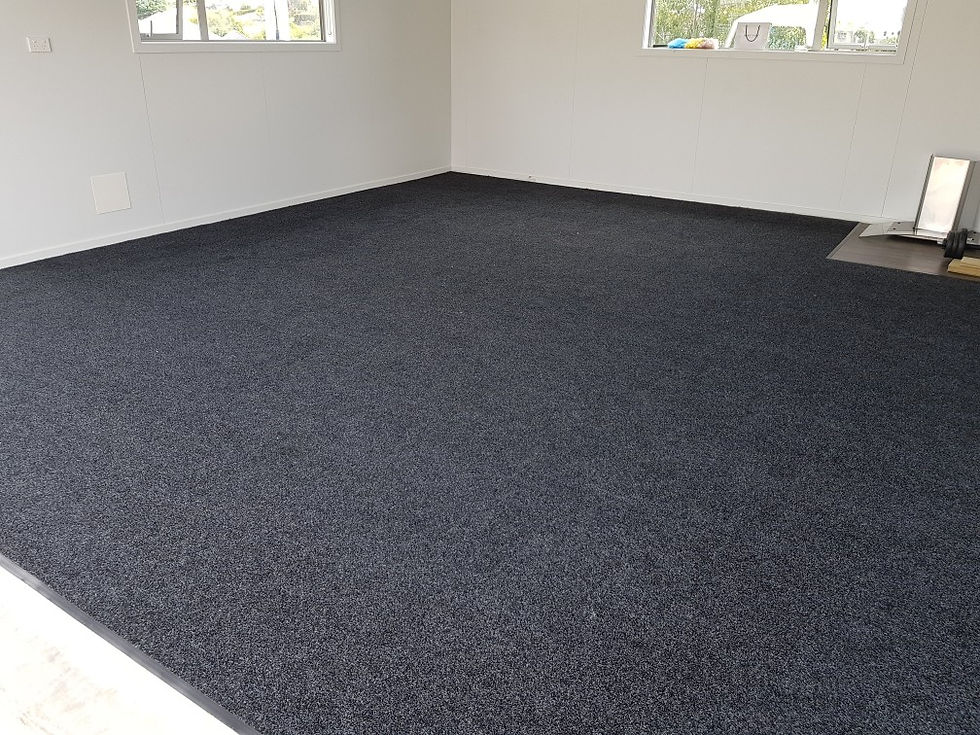
Once the carpet is fully laid out, check the entire floor for any signs of the following: wrinkles or bubbles (press these out while the adhesive's still workable); lifting edges (add more tape or adhesive); and uneven cuts (trim as needed). A properly installed garage carpet transforms cold concrete into usable space, but botched installation means wrinkles, lifting edges, and premature wear.
Common DIY Mistakes and How to Avoid Them
Mistake 1: Rushing the Floor Prep
Consequence: Carpet doesn't stick, lifts within months, and traps dust underneath.
How to Fix: Spend proper time cleaning and checking moisture. It's tedious but essential.
Mistake 2: Using Too Little Adhesive or Tape
Consequence: Edges curl, high-traffic areas lift, carpet moves underfoot.
How to Fix: More is better. Don't skimp on the one thing holding everything down.
Mistake 3: Cutting from the Face Instead of the Back
Consequence: Ragged edges, visible mistakes, wasted material.
How to Fix: Flip it over, mark carefully, and best to cut from underneath.
Mistake 4: Not Accounting for NZ Humidity
Consequence: Moisture wicks through, creates mould, and the carpet ends up smelling damp.
How to Fix: Use moisture barrier primer in damp garages. It's an extra step, but it prevents bigger problems along the way.
Getting the Right Garage Carpet and Supplies: What We Offer DIY Customers

Even if you're doing the installation yourself, choosing the right garage carpet matters enormously.
We supply quality garage carpet by the metre. You measure, we cut to size, and you install yourself. You save on installation labour while getting good materials you can rely on without breaking the bank.
Not sure what you need? We'll measure your garage, recommend appropriate carpet, calculate exactly what you need, and explain the DIY process with no strings attached. We'll let you decide later on if DIY is the best route for your specific situation.
At CarpetMe, we're honest about DIY viability. Sometimes we'll say "yeah, you can do that yourself, and here's what you need." Other times, we'll explain why professional installation is worth it for your specific situation.
Making Your Decision
How to install garage carpet NZ yourself saves money if you're reasonably handy and have time. But if you think the risks outweigh more than doing it yourself, or you simply can't find time to start that how to install garage carpet NZ project, then professional installation is the most viable solution for you.
Our honest piece of advice? Simple garages with level floors and rectangular layouts are genuinely DIY-friendly. But complex spaces, moisture issues, and your choice of carpet may require more attention than you initially think. Get professional advice first, so you can see for yourself where you can save more in the long run. Remember: your time and money are both equally important.
Ready to tackle it yourself? Get Your Garage Carpet Supply Quote today. Still unsure if DIY's right for your situation? Book a Free DIY Assessment - we'll measure your space and give you our honest take about whether professional installation makes more sense.


Comments